Follow the Steps of Queen Isabella I: Exploring Her Palace in Segovia
As one of the most influential and powerful monarchs in Spanish history, Queen Isabella I left behind a remarkable legacy. Her grand palace in Segovia stands as a symbol of her rule and is an iconic landmark for tourists to explore. Come along with us as we follow the footsteps of Queen Isabella I and uncover the secrets and beauty found within her royal palace.
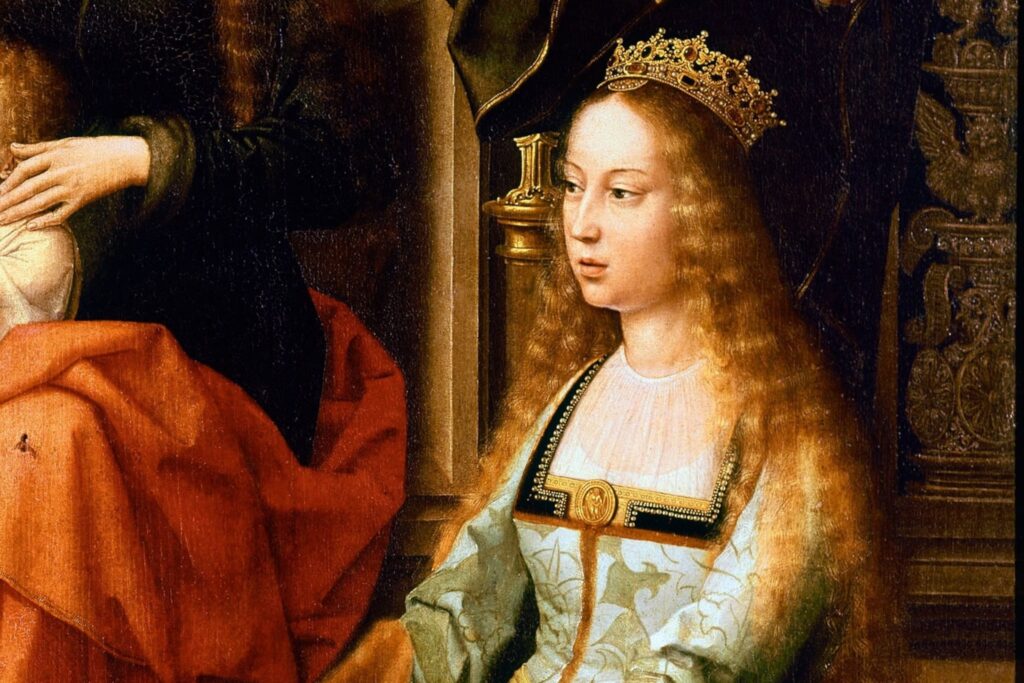
Overview of Queen Isabella I and her Palace in Segovia
Queen Isabella I of Castile and Leon was a powerful monarch who held a pivotal role in the Spanish Renaissance. She was responsible for the unification of Spain, and her reign ushered in an era of prosperity and progress. Her palace in Segovia is a testament to her legacy, as it stands today as a reminder of her greatness.
The palace is located in the historic city center of Segovia, near Plaza Mayor and Plaza del Azoguejo. Built by King Juan II in the 15th century, it served as a royal residence for members of the Castilian court during the 16th century. The palace itself is built on top of an ancient Roman fort that dates back to the 1st century AD. The entire city center is surrounded by medieval walls from the 11th century, which are accessible from both Plaza Mayor and Plaza del Azoguejo.
Aside from its historical significance, Queen Isabella I’s palace also boasts stunning architecture with Romanesque churches, military academies, bus stations, train station and more scattered throughout its grounds. Its entrance features two grand towers with intricate designs that form a coat of arms. Inside visitors will find 12th-18th century sculptures depicting various scenes from Queen Isabella I’s life story along with beautiful courtyards and gardens spanning across 3 hectares (7 acres).
Queen Isabella I’s palace in Segovia is a must-see for anyone looking to explore a rich history and captivating architecture. Get ready to uncover the secrets of this grand palace as we take a look at its purpose in the next section!
Purpose of the Article
The purpose of this article is to provide readers with an in-depth guide on exploring the palace of Queen Isabella I in Segovia. It aims to educate and inform readers on the history and significance of the palace, as well as provide practical tips and recommendations for those planning to visit. By highlighting the beauty and grandeur of the palace, the article seeks to inspire readers to explore this historical gem and appreciate the rich cultural heritage of Segovia. Ultimately, the article seeks to promote tourism and encourage people to immerse themselves in the fascinating history and culture of Spain.
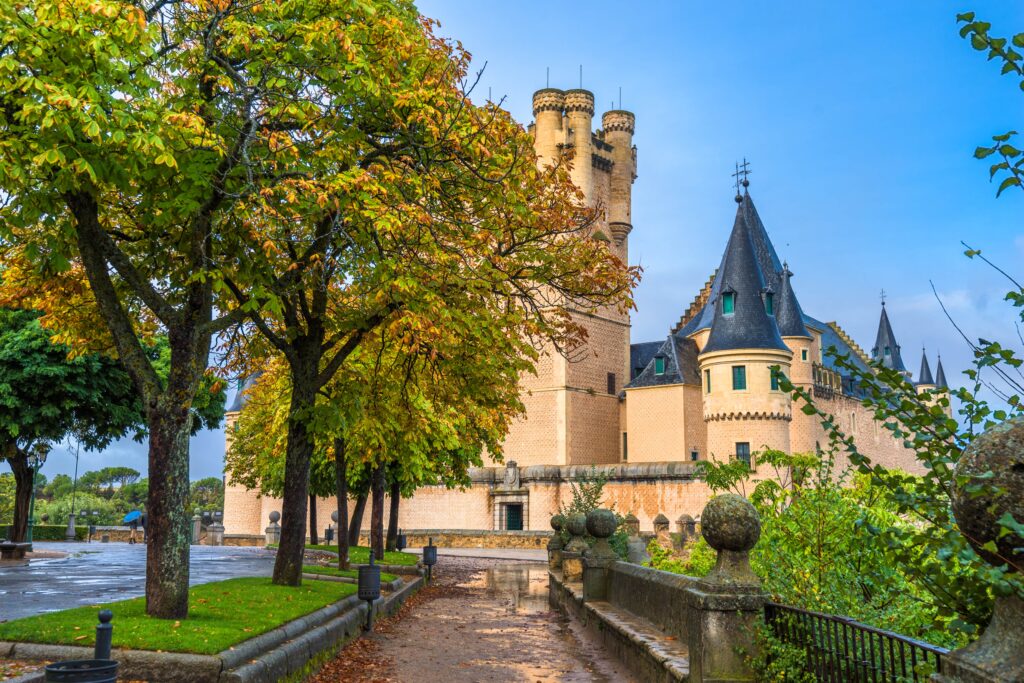
The History of Segovia
Segovia is a city rich in history, and exploring it is a must-do for history buffs. The city was founded by the Celtiberians, who were later conquered by the Romans. During the Middle Ages, Segovia was a center of power and culture, and it was during this time that Queen Isabella I lived in the city’s palace.
The palace, which is now a museum, was built in the 15th century and was the residence of Queen Isabella I and her husband King Ferdinand II. The palace is a stunning example of Gothic architecture and features beautiful gardens and courtyards.
Segovia is also home to the Roman aqueduct, which is one of the most important and well-preserved Roman monuments in Spain. The aqueduct was built in the 1st century AD and is made up of over 20,000 granite blocks. It stretches over 800 meters and is an impressive sight to behold.
In addition to the palace and the aqueduct, Segovia has many other historic sites to explore, including the Alcázar, a medieval fortress that was once a royal palace; the cathedral, which was built in the 16th century and is considered one of the finest examples of Gothic architecture in Spain; and the Jewish Quarter, which is home to many historic synagogues and other buildings.
Overall, Segovia is a city steeped in history and is a must-visit destination for anyone interested in the rich cultural heritage of Spain.
Ancient City Founded by the Romans
Segovia is a city with a rich history that dates back to the 1st century BC when it was founded by the Romans. It flourished as an important Roman military post and as a commercial center, becoming an important hub of culture and commerce. Over time, Segovia has been home to many great civilizations, from Celts to Visigoths, Muslims to Christian kings. Its 12th century walls still encircle much of its center today, making it one of the most well-preserved cities in Spain.
Segovia has been called “the City of Kings” due to its grand palace and other attractions built during the reigns of Queen Isabella I and King Juan II. While visiting Segovia you can enjoy breathtaking views from Cerro de San Miguel Hill or explore its romanesque churches and ancient armory rooms. The city also houses fascinating museums such as the National Museum of Artillery, which displays almost 700 years’ worth of artifacts related to military training and weaponry.
Segovia’s magnificent architecture is sure to take your breath away and transport you back in time while learning about its fascinating past. And if you’re looking for a unique way to get around town, don’t forget that Segovia has both train and bus stations! Whether you’re a historian or simply looking for a beautiful place to visit, Segovia is definitely worth exploring!
Middle Ages: Development of Medieval Castle, Romanesque Churches, and Plaza Mayor
Segovia, located in Spain, is home to some of the most well-preserved medieval architecture in the world. During the Middle Ages, it was a major trading center and saw a surge in development of its unique Romanesque churches, castle fortifications, and Plaza Mayor.
The city’s most iconic sites are undoubtedly the Alcazar de Segovia: an 11th century medieval castle with three distinct towers that served as a royal residence for centuries. This impressive structure also houses an impressive collection of Renaissance art and artifacts from across Europe. The city’s Romanesque churches are also worth exploring; these ornate buildings date back to the 13th century and feature intricate carvings depicting scenes from biblical stories.
No visit to Segovia would be complete without seeing its Plaza Mayor – the city’s main square. Here you can take in its beautiful 18th century architecture, including its coat of arms on display at one end of the plaza. From here you can also get stunning views of the entire city and surrounding area. Whether you’re looking to explore history or take in stunning views, Segovia has something for everyone!
15th-16th Centuries: Reign of Juan II and Building of the Royal Palace
The 15th and 16th centuries in Segovia saw the reign of King Juan II, who came to power following a civil war. During his rule, the city experienced a period of great growth and prosperity. Juan II commissioned the building of one of the most iconic buildings in Segovia: The Royal Palace. This sprawling structure was built on top of an ancient stone fortification that had been constructed during the 1st century AD.
The Royal Palace is an impressive example of Spanish Renaissance architecture, featuring grand courtyards, towers, and terraces with stunning views over the city below. Inside you can explore its lavish interiors, decorated with intricate woodwork and ornately painted walls. Of particular note are its beautifully preserved frescoes from the 16th century depicting scenes from Greek mythology.
Today, visitors can explore this magnificent palace as part of their tour around Segovia’s historic city center. Close by is Plaza del Azoguejo—a bustling hub for shopping and dining—as well as Segovia’s train station and bus station for easy access to nearby cities. Visitors can also visit the nearby Military Academy which dates back to the 12th century and has strong ties with Queen Isabella I.
18th Century: Expansion Across the Entire City
In the 18th century, Segovia experienced a period of growth and expansion that touched every corner of the city. The Royal Palace was renovated and its gardens expanded to include lush lawns and flowers, making it even more spectacular than before. Meanwhile, many new buildings were constructed across the city, such as Plaza Mayor and several romanesque churches. During this time, Queen Isabella I also extended the city wall to encompass the entire city—including some sections that still stand today.
This expansion was so successful that Segovia became one of the most popular tourist destinations in Spain during this era. Visitors from across Europe flocked to see its grand palaces, ancient monuments, and stunning natural landscapes. The Royal Palace remained a favorite attraction for visitors during this period—even though it had lost its original purpose as a royal residence since Queen Isabella I moved her court to Madrid in 1754.

Exploring Queen Isabella I’s Palace in Segovia
Queen Isabella I’s Palace in Segovia is a remarkable testament to the grandeur of Spain’s 15th and 16th century monarchs. Located in the beautiful Spanish city, it is surrounded by lush gardens and breathtaking architecture. Visitors can explore its many rooms, including Plaza del Azoguejo, which was once home to Juan II and his court. The palace also contains the coat of arms of Queen Isabella I, who was born in Segovia in 1451.
The palace is made up of sections from different centuries. It dates back to at least the 12th century, as there is evidence of a fortress that existed during this period. During the 13th and 11th centuries it was expanded further with additions such as a keep, moat and tower. Later on in history it was modernized with 18th-century features such as an arcade and baroque decorations.
Visitors can also explore nearby attractions such as Segovia’s old train station or bus station from the 1st century, along with a military academy that dates back to the 2nd century BC. Finally, take time to wander through the ancient cobblestone streets of the city center to see how it has evolved over time—including some remnants from medieval times when Queen Isabella I reigned supreme.
The Queen Isabella I’s Palace in Segovia is a remarkable testament to the grandeur and history of Spain, providing visitors with an unforgettable experience. From the royal court to the cobblestone streets, this palace is sure to transport you to a different time. Ready for the next adventure? Get ready to explore the old train station, bus station, and city center of Segovia!
Getting There: Train Station, Bus Station, and City Center
Getting to Queen Isabella I’s palace in Segovia is relatively easy, as the city has a well-connected transportation system. There are several options to choose from depending on your preferences and budget.
If you’re arriving from Madrid, the easiest way to get to Segovia is by train. You can take the high-speed train (AVE) from Madrid’s Chamartin station to Segovia’s Guiomar station, which takes about 30 minutes. From there, you can take a taxi or a bus to the city center.
Alternatively, you can take a bus from Madrid’s Moncloa station to Segovia’s bus station, which takes about an hour and a half. The bus is a more affordable option, and there are several departures throughout the day. From the bus station, you can take a taxi or a local bus to the city center.
Once you arrive in Segovia, you can explore the city center on foot as it is relatively small and easy to navigate. The palace is located in the heart of the city, just a few minutes’ walk from the famous Roman aqueduct. You can also take a local bus or a taxi to get there.
Overall, getting to Queen Isabella I’s palace in Segovia is straightforward and hassle-free. Whether you choose to take the train or the bus, you’ll be rewarded with stunning views of the city and its surroundings.
What to See: Coat of Arms, Royal Residence, Military Academy, Plaza del Azoguejo
Once you arrive in Segovia, the first thing you will notice is the Coat of Arms of Queen Isabella I that adorns the entranceway to her Royal Residence. Located at Plaza del Azoguejo, this iconic symbol is a reminder of the power and influence she had over Spain during her reign in the 15th and 16th centuries.
Inside the palace, visitors can admire its impressive architecture and grandiose interiors. Take some time to explore its various rooms that were once used by Queen Isabella I as well as her husband King Juan II. Adjacent to the palace is a military academy which was established in 1814 by King Ferdinand VII as part of his efforts to strengthen Spain’s defense forces.
At Plaza del Azoguejo, visitors can also explore several other historic monuments such as an 11th century Romanesque church, a 13th century city wall and many more! With a rich history spanning from the 1st century BC up to modern times, there’s no shortage of sites to explore in Segovia. So take some time to wander around this Spanish city and take in all of its amazing sights!
Other Attractions: 12th-13th Centuries Roman Walls & 1st Century Aqueducts
From the 12th and 13th centuries, Segovia’s impressive city walls stand tall, encircling the entire city. These walls were constructed for defensive purposes, but also to serve as a reminder of the power of the monarchy during this period. There are several sections of these walls that can be explored today, such as the Puerta de San Andrés and Puerta del Sol.
One of Segovia’s other major attractions is its 1st century Aqueducts. These structures are one of the best-preserved Roman aqueducts in all of Europe and provide a stunning view from any angle. Built from 20,000 granite blocks with no mortar or cement used, it is an incredible feat of engineering for its time. Visitors can admire these ancient monuments up close by taking a stroll along Calle Real or by climbing up to the top of Cerro de San Miguel hill for spectacular views across the entire city.
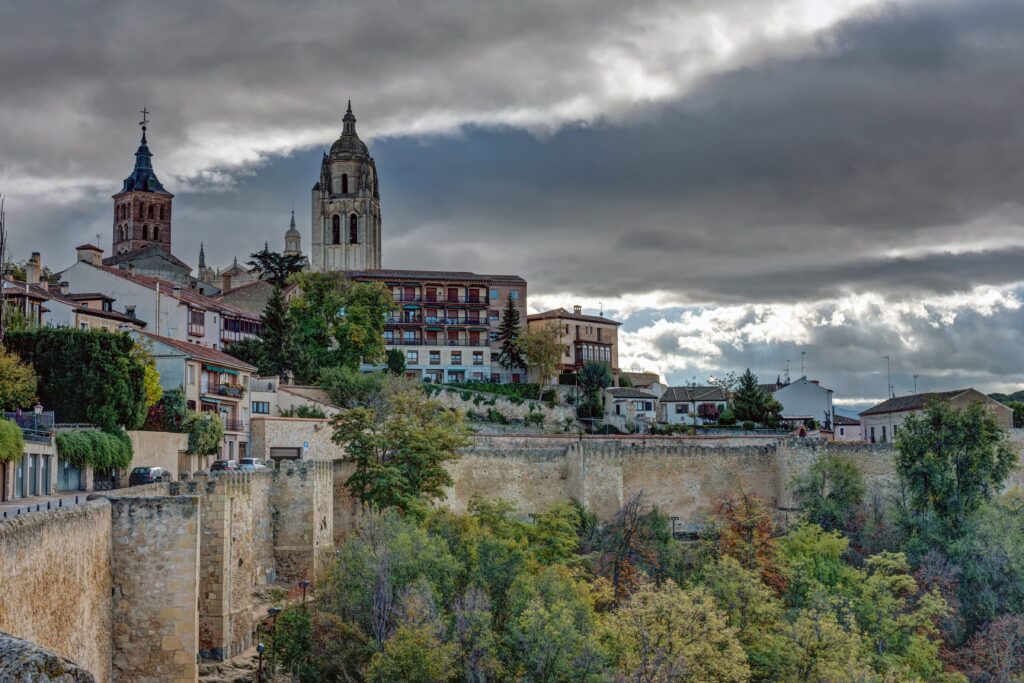
Summary of What to Expect at Queen Isabella I’s Palace in Segovia
Queen Isabella I’s palace in the ancient city of Segovia is an architectural marvel. Built during the 15th and 16th centuries, it sits atop a hill near Plaza Mayor, Plaza del Azoguejo and the train station. It was built as a royal residence with a grand entrance featuring its coat of arms from the 11th century. From here visitors can explore the palace’s awe-inspiring rooms, its ruined gardens and take in stunning views of the city center below.
The palace itself is made up of several different structures that were added over the years, beginning in the 12th century with a medieval castle. This castle was later added to by King Juan II who added two romanesque churches. Later still during the 18th centuries, additions such as a military academy were added to complete its current form.
Visitors will be able to explore these various structures at their own pace and enjoy wonderful views across Segovia from its many towers and balconies. A great way to reach Queen Isabella I’s Palace is by taking one of the buses or trains that depart from Segovia’s bus station or train station respectively.
Queen Isabella I’s Palace is truly a remarkable sight to behold, its many structures and breathtaking views making it a must-see for anyone visiting Segovia. Get ready to delve into the history and culture of this iconic palace in the Conclusion section!

Conclusion
In conclusion, exploring Queen Isabella I’s palace in Segovia is a truly unique and fascinating experience. It offers a glimpse into the life and times of one of Spain’s most important historical figures, and provides visitors with a chance to see some of the most beautiful and well-preserved architecture from the late medieval period.
By following the steps of Queen Isabella I, visitors can gain a deeper understanding of her legacy and the impact she had on Spanish history. From her childhood in the palace to her role in the Spanish Inquisition, exploring the palace allows visitors to walk in the footsteps of this remarkable queen and learn more about her life and times.
Overall, if you’re interested in history, architecture, or just looking for a unique and memorable experience, exploring Queen Isabella I’s palace in Segovia is definitely worth a visit. So why not follow in the footsteps of this remarkable queen and discover the beauty and history of her palace for yourself?

Neil James
Neil James is a British expat who is a long term resident of Spain. He has traveled the country extensively.